

Best Internet and TV Packages for Moving: A Complete Guide
Moving to a new home is widely recognized as one of the most stressful life events, often ranking alongside job changes and weddings in terms of logistical complexity. According to recent industry data, the average household spends over 100 hours coordinating the relocation of essential services, including electricity, water, and high-speed connectivity. This statistic highlights why a streamlined approach to setting up your new home is critical for maintaining sanity during the transition. Utility Connect simplifies this process by offering a complimentary concierge service that shops the best rates and packages for you. By leveraging a single point of contact, homeowners and tenants can avoid the common pitfall of service gaps that leave a new house disconnected and uninhabitable. (Utility Connect Free Home)
Understanding Service Availability and Infrastructure
Before selecting a provider, you must verify what infrastructure exists at your new address. This is the foundational step that dictates your options for speed, reliability, and cost. Internet availability is strictly geographic, meaning the technology delivering your connection depends entirely on the physical lines running to your street.
Utility Connect helps you navigate this complexity by instantly checking provider availability for your specific address. This service is particularly valuable for renters and buyers who may not have direct relationships with local providers. When you engage our personal concierge, they will identify which companies can service your new home and compare their current promotional rates. This eliminates the need to call multiple providers individually, saving you hours of phone time.
According to the Federal Communications Commission, broadband access remains a critical utility for modern living, yet coverage gaps still exist in rural and semi-urban areas. Our platform ensures you see all viable options, whether they are major national carriers or local fiber providers. This transparency allows you to make an informed decision based on actual availability rather than guesswork.
Comparing Internet Technologies for Your New Home
Not all internet connections are created equal. Understanding the differences between fiber, cable, and DSL is essential for choosing the right package for your household's needs. Fiber-optic internet is a high-speed connection that uses light signals to transmit data, offering symmetrical upload and download speeds that are ideal for remote work and streaming.
Fiber vs. Cable Internet
Cable internet uses the same coaxial lines that deliver traditional television services. While widely available, cable speeds can fluctuate during peak hours due to network congestion. In contrast, fiber connections maintain consistent performance regardless of usage levels. If your new home is in a fiber-ready area, this is often the superior choice for latency-sensitive activities like gaming or video conferencing.
Utility Connect compares these technologies side-by-side, allowing you to see the price per megabit for each option. Our concierge service also checks for any installation fees or equipment rental costs that might not be immediately obvious in online ads. This detailed breakdown ensures you understand the true cost of your new internet service.
DSL and Satellite Alternatives
If fiber and cable are unavailable, you may need to consider DSL or satellite options. DSL uses telephone lines and is generally slower but can be more reliable in areas with poor cable infrastructure. Satellite internet, while historically criticized for high latency, has improved significantly with new low-earth orbit technologies. These options are crucial for rural homeowners who need reliable connectivity for work and communication.
Our platform ensures you see all available providers, including smaller regional companies that may offer better customer service than national giants. By consolidating these options into one view, you can quickly identify the best balance of speed and cost for your specific location.
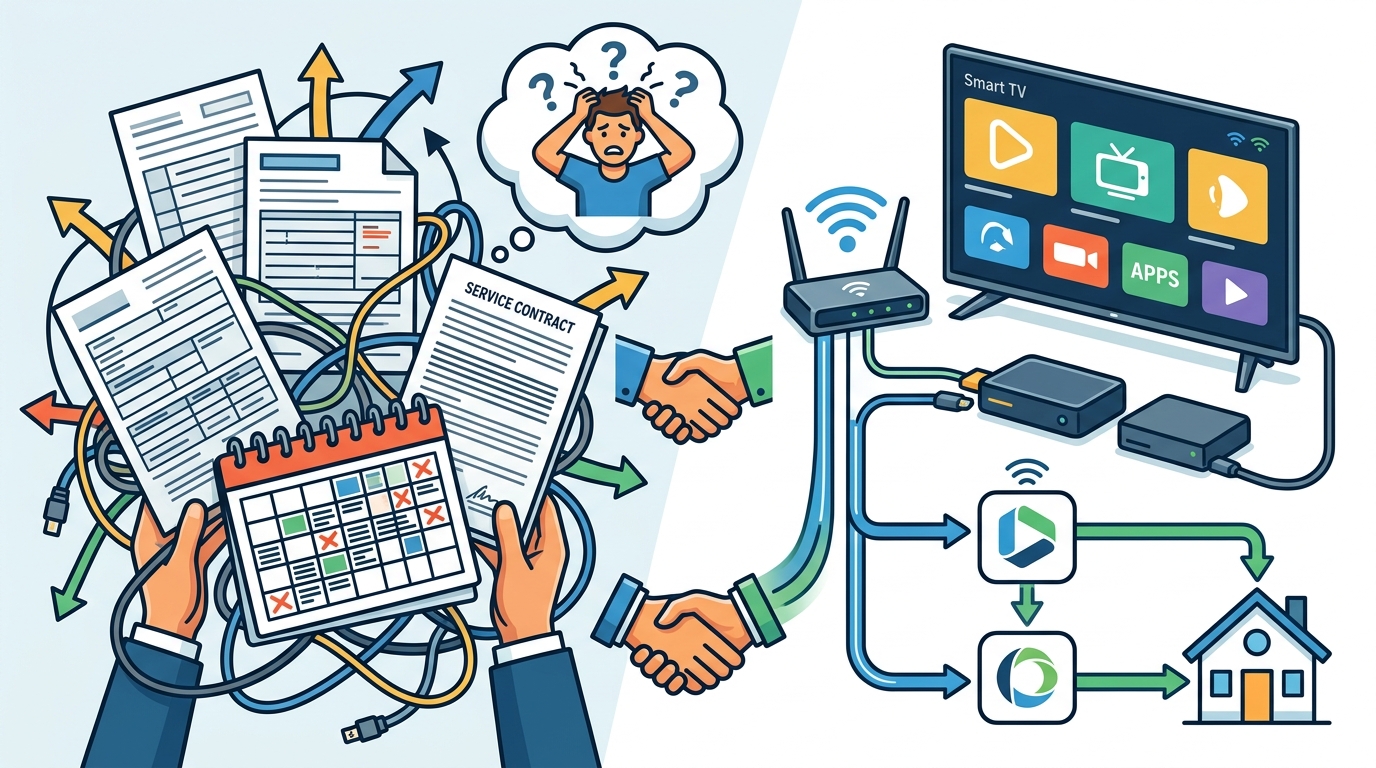
Navigating TV and Entertainment Bundles
While streaming has changed how we consume media, many households still prefer traditional cable or satellite TV for live sports and news. TV bundling is a strategy where internet and television services are combined into a single monthly bill, often resulting in significant discounts compared to purchasing services separately.
Traditional Cable and Satellite
Traditional providers like Comcast Xfinity or DirecTV often offer bundled packages that include internet, TV, and sometimes phone service. These bundles can be cost-effective if you use multiple channels and want a single point of contact for support. However, they often come with long-term contracts and equipment rental fees that can add up over time.
Utility Connect helps you evaluate these bundles by comparing the total monthly cost against à la carte streaming options. Our concierge service also checks for promotional rates that expire after the first year, ensuring you are aware of potential price increases. This transparency helps you avoid surprises on your first bill.
Streaming and OTT Alternatives
Over-the-top (OTT) streaming services like Netflix, Hulu, and Disney+ have become popular alternatives to traditional TV. These services require a robust internet connection but offer greater flexibility and lower monthly costs. If your household primarily streams content, you may not need a traditional TV package at all.
Our platform allows you to compare the cost of a high-speed internet plan against the combined cost of your preferred streaming services. This comparison helps you determine if a traditional bundle is actually the better financial choice for your lifestyle. By removing the guesswork, you can choose the entertainment setup that best fits your budget.
Integrating Security and Smart Home Systems
Security is a top priority for new homeowners and renters alike. Modern utility packages often include options for home security systems, which can be monitored professionally or self-monitored via smartphone apps. Home security systems are integrated networks of cameras, sensors, and alarms that protect your property from intruders and environmental hazards.
Professional Monitoring vs. Self-Monitoring
Professional monitoring services connect your alarm system to a central dispatch center that contacts emergency services if needed. This option provides peace of mind but typically involves a monthly monitoring fee. Self-monitoring systems allow you to receive alerts on your phone and handle emergencies yourself, often at a lower cost.
Utility Connect includes security providers in its comparison tool, allowing you to see pricing and contract terms side-by-side. Our concierge service can also help you schedule installation appointments that align with your moving schedule, ensuring your new home is secure from day one.
Smart Home Integration
Beyond security, smart home devices like thermostats, lights, and locks can enhance your new home's efficiency and convenience. Many utility providers now offer smart home packages that include these devices and installation support. Integrating these systems early in your move can help you manage energy costs and automate daily tasks.
Our platform ensures you see all available smart home options, including those from major tech companies and specialized security providers. By consolidating these choices, you can create a cohesive smart home ecosystem that works seamlessly with your new internet and TV services.
The Logistics of Moving Day Utilities
Coordinating the activation of utilities is a critical logistical challenge. Gaps in service can leave you without electricity, heat, or internet during your first days in a new home. Utility coordination is the process of scheduling the disconnection of services at your old home and the activation of services at your new one.
Scheduling and Timing
Most providers require 24 to 48 hours notice to activate new services. It is advisable to schedule your new services to start on or before your move-in date. Conversely, you should schedule the disconnection of your old services for the day after you have moved out to avoid any gaps in coverage.
Utility Connect streamlines this process by handling all scheduling for you. Our concierge service ensures that all your providers are aligned and that there are no conflicts in your appointment times. This proactive approach eliminates the stress of managing multiple phone calls and emails.
Documentation and Verification
Keeping records of your service activations and account numbers is essential for future reference. Our platform provides a centralized dashboard where you can view all your utility accounts and contact information. This documentation is particularly useful if you need to reference your services for insurance or tax purposes.
By using a single service to manage your utilities, you reduce the risk of errors and oversights. Our team verifies all account details before finalizing your setup, ensuring that your new home is fully connected and ready for you.
Key Takeaways
- Verify Infrastructure First: Always check provider availability at your new address before selecting a package to ensure you have viable options.
- Compare Fiber and Cable: Fiber-optic internet offers superior symmetrical speeds, while cable may be more widely available but prone to congestion.
- Evaluate Bundles Carefully: TV and internet bundles can save money, but check for promotional rate expiration dates and equipment fees.
- Integrate Security Early: Schedule home security installation to coincide with your move-in date for immediate protection.
- Use a Concierge Service: Utility Connect offers a free service to shop rates and schedule appointments, saving you time and reducing stress.
- Plan for Gaps: Schedule disconnections and activations with a buffer to avoid any days without essential services.
- Document Everything: Keep records of all account numbers and contact information for future reference and support.
Frequently Asked Questions
How far in advance should I schedule my internet and TV installation?
It is recommended to schedule your installation at least two weeks before your move-in date. This allows time for provider availability checks and ensures your services are active when you arrive.
Can I bundle internet, TV, and security services together?
Yes, many providers offer bundled packages that include internet, television, and security monitoring. Utility Connect helps you compare these bundles to find the most cost-effective option for your needs.
What is the difference between fiber and cable internet?
Fiber internet uses light signals to transmit data, offering faster and more consistent speeds. Cable internet uses coaxial cables and is widely available but may experience slower speeds during peak usage times.
Do I need to cancel my old utilities before moving?
Yes, you must schedule the disconnection of your old utilities. Utility Connect helps you coordinate these dates to ensure there is no overlap or gap in service.
Is the Utility Connect service really free?
Yes, Utility Connect is a complimentary service for homeowners and tenants. Our personal concierge shops the best rates and packages on your behalf at no cost to you.
How does Utility Connect help with moving logistics?
Our service compares providers, negotiates rates, and schedules appointments for all your utilities, including internet, TV, security, and electricity, simplifying the entire moving process.
What if my new home doesn't have fiber internet?
If fiber is unavailable, Utility Connect will identify the best available alternatives, such as cable, DSL, or satellite, ensuring you have reliable connectivity options.
Start Your Free Utility Concierge Today
Don't let the stress of moving overwhelm you. Let Utility Connect handle the complex task of setting up your new home's utilities. Our free concierge service will shop the best rates, compare packages, and schedule appointments for you. Visit https://www.utilityconnect.net/sign-up to get started. You can also learn more about our services for brokers and agents or explore our blog for more moving tips. For direct assistance, call (877) 587-9566 or contact us at https://www.utilityconnect.net/contact.